
Washing machines used to be simple. Now they come with steam, AI cycle selection, app control, auto-dosing dispensers, and spin speeds measured in RPM like a sports car. Most of it is noise. Here are the five choices that will actually affect how happy you are with your washer three years from now — with honest takes on what’s worth paying for and what you can safely ignore.
1. Front load vs. top load — the most consequential choice
This is the fork in the road everything else depends on. Each type has a genuinely different set of trade-offs, and the right answer depends on your household more than on the spec sheets.
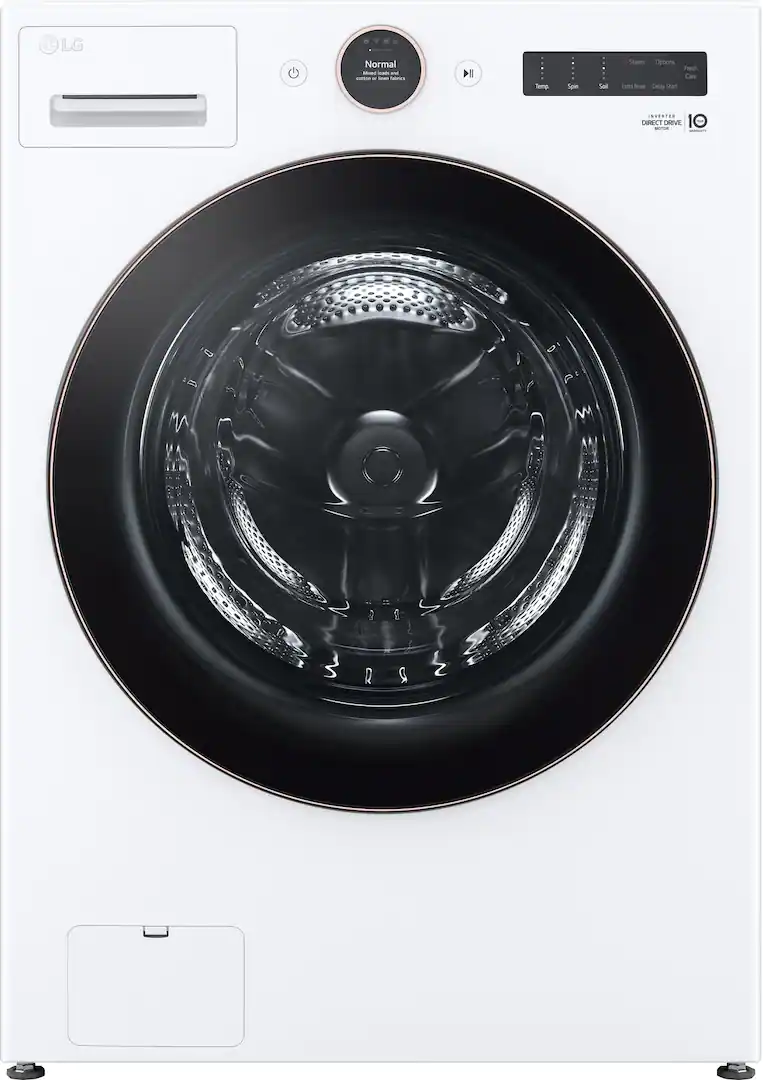
Front load
Tumbles clothes through a small amount of water rather than submerging them — which means lower water use (roughly 40% less), gentler action on fabrics, and a faster spin that extracts more water before the dryer cycle begins. The drum door is on the front, so front-loaders can be stacked with a matching dryer and fit in a closet or alcove with a much smaller footprint. The trade-offs: they cost more upfront, take longer to wash a load (45–60 min vs. 30–40 for top-loaders), and the rubber door gasket can develop mold if you don't leave the door ajar between loads.
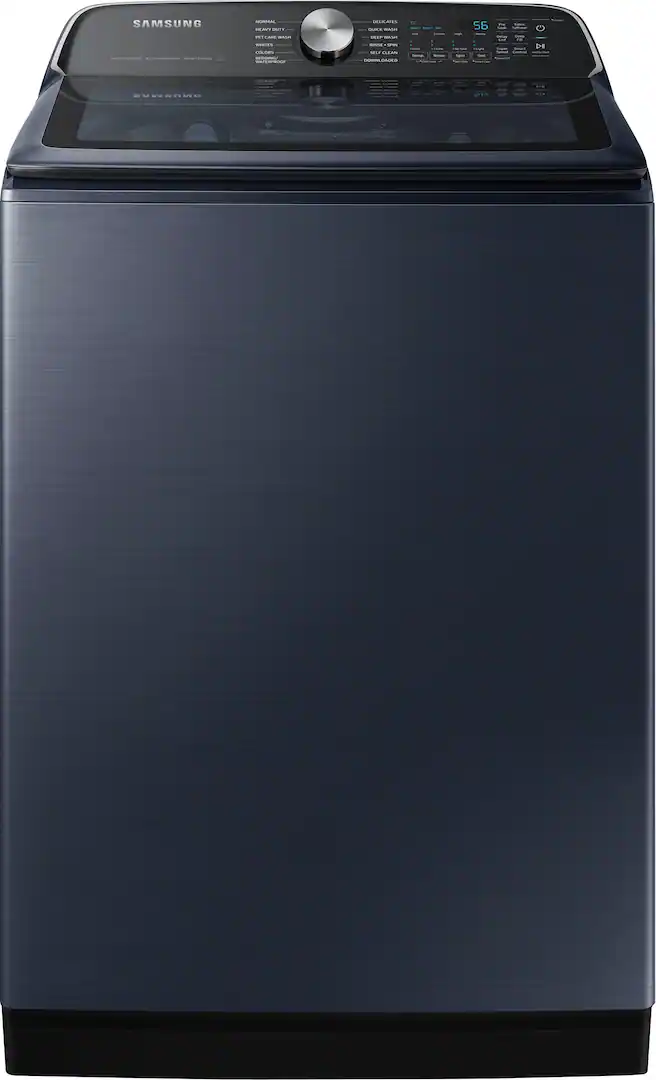
Top load
Loads from the top, costs less, and runs a faster cycle. Easier to add a forgotten sock after the cycle starts. Uses more water than a front-loader at the same capacity, and the spin speed is usually lower — meaning clothes come out wetter and need longer in the dryer. Can't be stacked with a dryer. The right choice if budget is a priority or if you genuinely prefer a shorter cycle over energy savings.
2. Agitator vs. impeller — a top-load-only decision
If you’re buying a top-loader, this is your next fork. Front-loaders tumble; top-loaders have to move clothes through the water differently, and there are two approaches.
Agitator
A central post that scrubs clothes back and forth through the water column. This is what most people grew up with. Agitators are effective on heavily soiled loads — work clothes, sports uniforms, muddy outdoor gear — because the mechanical scrubbing action is hard to beat. The downside: the post takes up interior space (effective load capacity is lower than stated), and the action can tangle and wear fabrics faster than alternatives.
Impeller
A low-profile disc at the bottom of the tub that creates a swirling water current. Gentler on fabrics than an agitator and uses the full tub volume — which is why impeller top-loaders tend to list larger stated capacities at the same drum size. Better for bulky loads like comforters and bedding that need room to move. Less effective at scrubbing heavily soiled work wear.
2-in-1 removable agitator
Whirlpool's middle-ground option: a post you can pull out entirely for oversized or delicate loads, then snap back in for everyday laundry that benefits from scrubbing action. It's not a gimmick — it genuinely works, and for households that do both types of laundry regularly, it's worth looking at.
3. Capacity — how much do you actually need?
Most households are well served by 4.5–5.0 cu. ft. A 5.0+ cu. ft. drum handles a king-size comforter in a single load without bunching. Go below 4.5 only if you’re a single person or couple, or if you’re specifically fitting a compact unit into a closet.
Under 4.5 cu. ft.
Right for 1–2 person households running smaller loads. Budget agitator top-loaders in this range are often more reliable long-term because they have fewer electronics and sensors to fail. Compact 24-inch front-loaders (around 2.5 cu. ft.) are a completely separate category — they're designed for closets and alcoves where a full-sized washer won't physically fit.
4.5 – 4.9 cu. ft.
The sweet spot for couples and small families. Handles a week's laundry from two to three people, manages most bedding in a single load, and covers the full range of cycle options without the added cost of a mega-capacity model.
5.0 cu. ft. and up
For large families running multiple loads daily, or anyone who regularly washes king bedding, comforters, or athletic gear in bulk. Note that the extra cubic footage benefits front-loaders more than top-loaders — a 5.0 cu. ft. front-loader is meaningfully larger than a 5.0 cu. ft. top-loader with an agitator post taking up interior space.
4. Steam: who actually benefits, and who can skip it
Steam on a washer works differently than steam on a dryer. In a washer, steam is injected at the start of the cycle to penetrate and loosen set-in stains before the water cycle begins. It also raises the drum temperature enough to denature allergens — reducing pet dander, dust mites, and pollen in fabric by over 95% in AAFA-certified models.
Worth paying for
- Allergy or asthma sufferers — AAFA-certified steam cycles (LG Allergiene) demonstrably reduce common household allergens in fabric.
- Pet households — pet dander in laundry is persistent; steam is the most effective way to handle it without a separate cycle.
- Heavy pre-treaters — if you currently pre-treat most loads before washing, steam eliminates that step for the majority of everyday soiling.
You can probably skip it
- No allergy concerns — if your household doesn’t have allergy or asthma issues, you won’t notice the difference on everyday loads.
- Budget-first buyers — steam adds $100–$200 to the price of a comparable machine. If budget is the priority, spend it elsewhere.
5. Smart features: the two that are genuinely useful
Wi-Fi connectivity on a washer earns its place for one reason above all others: the end-of-cycle notification. Laundry that sits wet in a drum for two hours is how you get musty-smelling clothes — and a push notification that tells you the cycle finished solves it without you having to hover near the laundry room. That alone justifies choosing a smart model over an equivalent dumb one if the price difference is small.
Worth having
- End-of-cycle notifications — the single feature most likely to improve your laundry habits.
- Remote start — useful when you want a load ready before you get home, or need to delay a cycle until off-peak hours.
- Smart Diagnosis / ThinQ Care — lets you identify error codes from your phone instead of calling support.
You can skip
- AI cycle selection — you’ll run Normal for 95% of loads anyway. The AI learns your habits and then recommends Normal.
- Downloadable specialty cycles — they exist, almost nobody downloads them after the first week.
- Voice assistant integration — you have a phone; you’re already holding it when you start the wash.
One splurge that consistently earns its price
If you’re buying a front-loader for an apartment, condo, or home where laundry lives in a closet — stackability is the upgrade that will most change your daily experience. A stacked washer-dryer column takes about 9 square feet of floor space. Side by side takes 18. That difference is real in tight laundry spaces, and it’s permanent for the life of the machines.
For buyers upgrading to a premium front-loader anyway, the second upgrade worth considering is an auto-dosing dispenser. LG’s ezDispense holds enough liquid detergent for 20–30 loads and automatically meters the exact amount per cycle. This matters more than it sounds: overdosing detergent is the leading cause of residue buildup and mildew odor in front-loaders. Automatic dispensing eliminates the problem at the source.
The bottom line
Most households will be happiest with a front-load washer around 5.0 cu. ft., with steam if there are allergy or pet concerns, 1,300+ RPM spin speed, and app connectivity for end-of-cycle notifications. Budget $800–$1,200 for a reliable mid-range option. If space is tight, stackability should be your first filter. If you do a lot of heavy outdoor or work wear, consider a top-loader with an agitator instead — the cleaning action is still better for heavily soiled loads.
Skip the AI cycle selector, the downloadable cycle library, and the voice assistant integration. And before you commit to a price, add delivery, installation, haul-away, and fill hoses — the all-in total is typically $100–$200 more than the number on the tag.
Ready to compare models?
Browse washing machines →